


Contemporary Community Textile Artist Derbyshire UK
Collaboration Kindness Carbon Sensitivity

Daniel Lismore | Be Yourself Community Programme
From Studio Research To A Deep Community Exhibition Programme
Period
2022
My Role
Community Engagement Coordinator
Project Type
Institutional Engagement Programme
Location
Coventry
Project Overview
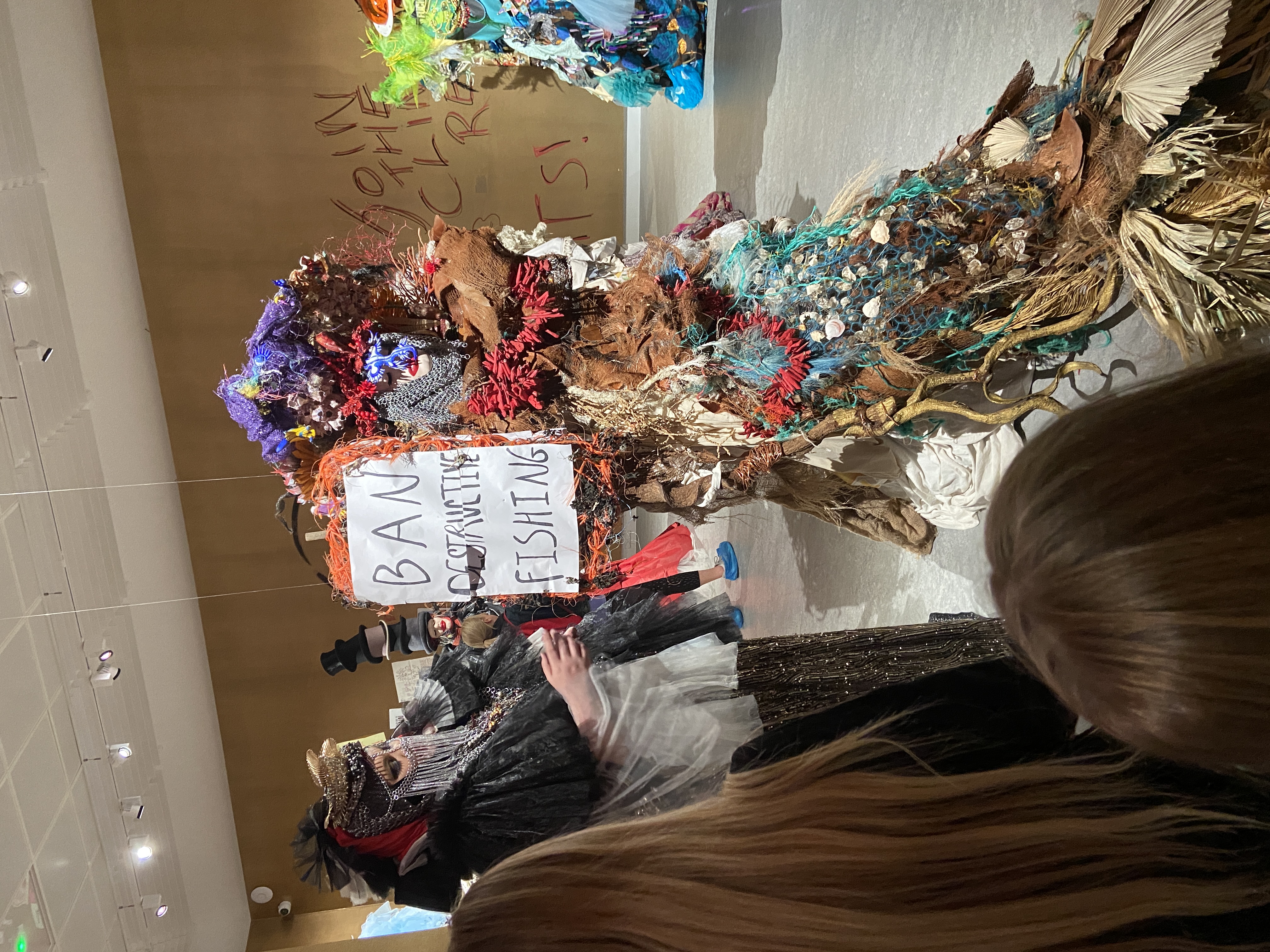
Daniel Lismore’s Be Yourself, Everyone Else Is Already Taken exhibition ran at the Herbert Art Gallery and Museum in Coventry from 18 February to 26 June 2022 as part of Coventry UK City of Culture and attracted around 50,000 visitors. I spent time alongside Daniel while his mannequins were being rebuilt, helping with hand stitching and the Greenpeace mannequin and learning how his materials, found objects and making processes came together. That close studio research became the starting point for the community engagement programme I then designed and led.
Seven community groups worked with authentic processes including vacuum forming, donated and reused materials and direct contact with Daniel. The programme grew to include a sensory handling trolley, a separate young people’s mannequin and textile masterclass, a formal community exhibition and later touring beyond the Herbert before the mannequins returned to the groups that had made them.
From Daniel’s Studio To The Community Programme
Daniel Lismore’s Be Yourself, Everyone Else Is Already Taken exhibition came to the Herbert Art Gallery and Museum as part of Coventry UK City of Culture, during a period when several of my projects were overlapping and feeding into each other. Daniel had also appeared in the Coventry Moves opening programme, alongside flags made through my earlier work with King Edward VI College, so his exhibition did not feel separate from the wider cultural activity happening across the city. Daniel had a commitment to community engagement, but the shape of that work had not yet been decided. I spent time alongside him while his mannequins were being rebuilt at the Herbert, helping with hand stitching, making tentacles for his Greenpeace mannequin and watching how he worked. Community volunteers were also brought into this space to help, talk and see the process at close range. Spending time there meant I could begin to understand the logic behind the work rather than trying to invent a community programme from the outside.
Learning Daniel’s Processes
One of the details that opened the project up for me was a group of pomegranate forms within Daniel’s work. I asked him how they had been made and he explained that vacuum forming had been used in connection with his costume work for English National Opera. That small question led into a much bigger piece of research. I contacted English National Opera to understand the process and equipment, then approached WMG at the University of Warwick to see whether something similar could become part of our community offer. A colleague and I went to Warwick to be trained in vacuum forming, equipment was then brought to the Herbert, and WMG supported the project with specialist technical knowledge. Pomegranate formers were also produced so participants could try a process that connected directly with Daniel’s own making. That authenticity mattered to me. If people were being invited to respond to Daniel’s practice, I wanted the experience to grow from the actual processes and material thinking behind his work rather than becoming a simplified craft activity with his name attached to it.
Seven Groups, Deep Engagement
The budget for the community programme was very small, so I had to think carefully about where money would make the biggest difference. I bought mannequin forms for the seven main groups and then concentrated on creating depth around those few starting points. Previous work at the Herbert had already taught me a great deal about who the museum was reaching and who might benefit from a more sustained relationship, so I looked again at the business plan and audience priorities, including men, particular postcode areas and communities beyond Coventry who might not automatically have felt part of City of Culture. Some organisations had also approached the Herbert asking if there were opportunities available, and I wanted to be responsive to those requests rather than treating engagement as something designed entirely from inside the institution. Seven groups became part of the main mannequin programme: Coventry Men’s Shed, Escape Arts, Grapevine Help and Connect, Hereward College, Hospital Education Service Coventry, Nuneaton In Stitches and Sitting Rooms of Culture. Nuneaton felt particularly fitting because Daniel had grown up on its outskirts, and because I was conscious that City of Culture activity could easily feel centred on Coventry itself if we did not make an effort to reach beyond it.
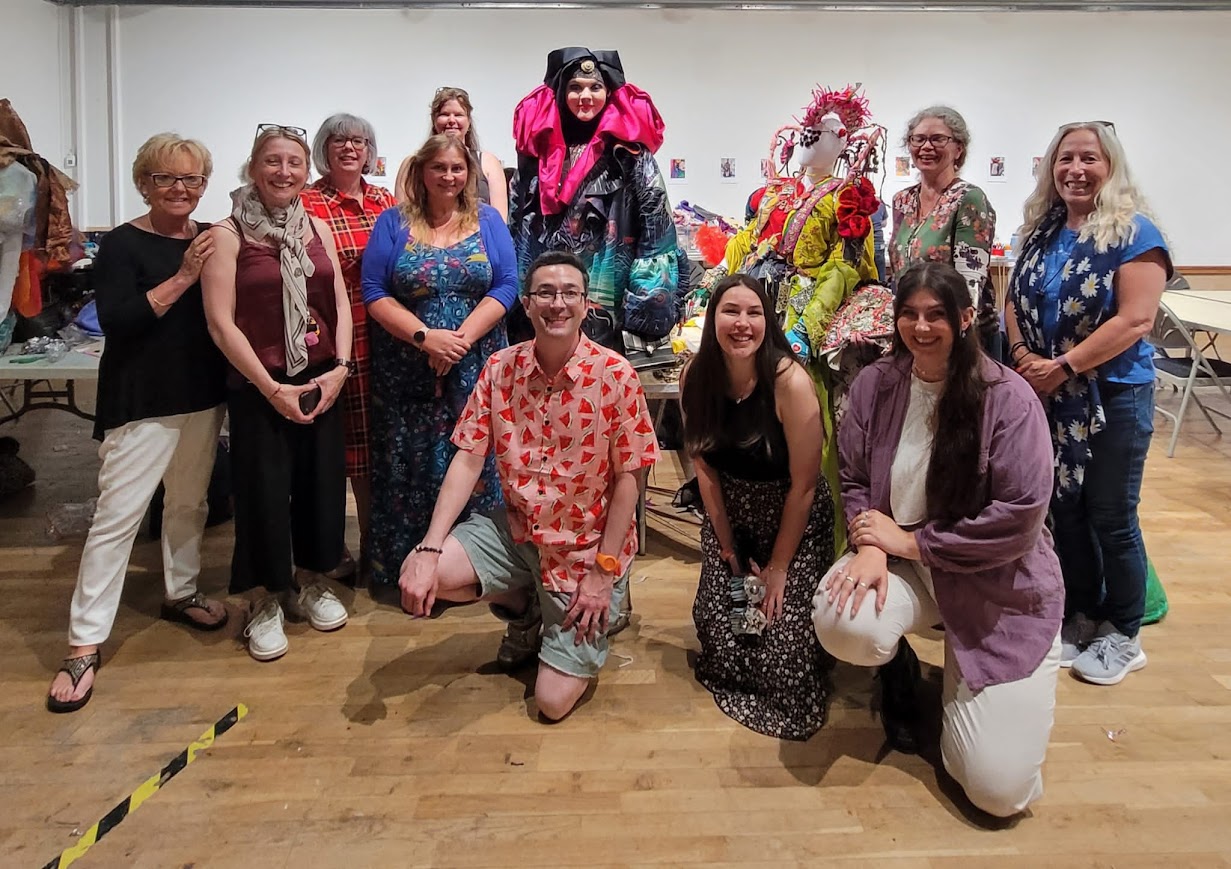
The workshops reflected that mixture of structure and freedom. I worked with three community groups at a time. Some came having prepared extensively and already had strong ideas about what their mannequin might become, while others responded much more spontaneously once they were in the room and surrounded by the materials. Daniel attended the sessions to talk with participants, answer questions and offer guidance, while I led the workshops and held the wider programme together. The groups visited his exhibition as part of the process, and I also kept photographs of key pieces in the workshop room so people could return to details of his work while making. Not every mannequin could be completed in one session, and I did not want the timetable to become more important than the work. Some groups took their mannequins back to their own spaces to continue, while others came back into the Herbert for further sessions. Different groups needed different amounts of time and support, and allowing for that was part of what made the project feel like a deeper relationship rather than a one off activity.
Reuse, Accessibility & Resourceful Making
The material side of the project developed in much the same way. Daniel’s practice made extensive use of reused, collected and repurposed materials, which connected naturally with my own way of working. I sourced fabric and objects through donations, charity shops and tip shops, reused surplus PROCESSIONS sashes that had already travelled through The Coventry Banner work, and contacted Alexander McQueen because fabric was available for community projects and Daniel had incorporated McQueen material into his own practice. The workshop room gradually became a large shared studio filled with cloth, objects, trims, found materials, the vacuum former and a glue gun station, another process Daniel used regularly. Participants were encouraged to bring things from home too, so the finished mannequins could hold something of their own communities, identities and experiences rather than simply imitating Daniel.
That way of working has always mattered to me for reasons that go beyond sustainability. Growing up without much money meant learning early how to be inventive with whatever was available, and that has remained part of the way I think about access. I have never wanted to offer people an art experience that depends entirely on expensive professional materials they could never afford to use again afterwards. The specialist vacuum forming equipment created an unusual opportunity in this project, but most of the making remained deliberately grounded in fabrics, found objects, donated things, glue guns and materials people could source or reuse themselves. For me, accessibility is not only about being able to enter a workshop. It is also about whether somebody can take an idea away and carry on without needing the resources of a museum behind them.
Making The Exhibition More Touchable
Alongside the seven mannequin groups I was also taking many other communities around Daniel’s exhibition, and those visits began to shape the wider access offer. It quickly became obvious that people wanted to touch the mannequins. Daniel’s work was full of texture, fabric, jewellery, found objects and layered surfaces that invited close looking, but the gallery setting naturally created limits around physical contact. Rather than simply telling people not to touch, I put together a sensory trolley using pieces from Daniel’s actual collection that visitors could handle. It was a practical response to something people were showing us in real time, and another reminder that access is not finished when somebody gets through the museum door. Sometimes you have to watch carefully, notice where the experience is not quite working and be willing to change the offer.
From Community Workshops To Exhibition
The seven community mannequins were eventually brought together for their own exhibition at the Herbert. I planned and installed the display in the museum’s former shop area, which was empty by then but still contained fixed retail furniture, so the space had to be worked with rather than treated as a blank gallery. The installation went through the Herbert’s curatorial team for approval before it was put in place, and there was a formal opening for the finished display. That transition mattered to me because the mannequins were no longer examples of workshop activity sitting around the edge of Daniel’s exhibition. The groups had made work that now occupied its own public space and was being treated as an exhibition in its own right.
There was also a separate strand with young people during the school holidays. Instead of making several figures, they worked collectively on one mannequin, with smaller groups taking responsibility for different body sections and using the same fabrics, glue guns and vacuum forming processes that had shaped the wider programme. The finished mannequin was displayed separately at the front entrance of the Herbert and Daniel formally opened the display with the young people. I also ran a separate Art Masterclass connected to Be Yourself for young people aged 8 to 16, beginning with a visit to the exhibition and then making small hand stitched banners about social causes and change. That workshop linked Daniel’s interest in identity, activism and self expression with a very accessible textile process that young people could understand and continue for themselves.
Taking The Herbert Beyond The Building
One idea kept running through all of this work: I did not want the Herbert to exist only inside its own building. People came into the museum, but the museum also needed to exist where people already were. Nuneaton In Stitches at the Station Gallery was based on Nuneaton railway station, and the mannequins later travelled beyond their original Herbert display into community and town centre settings across Warwickshire. They had begun inside a major City of Culture programme, but they developed a life outside it, reaching people who might encounter them while going about their everyday lives rather than because they had chosen to visit a museum. Eventually the mannequins returned to the groups that had made them, which felt like the right ending. The communities had not simply supplied material for somebody else’s cultural programme. They had made work, seen it exhibited, watched it travel and then retained ownership of what they had created.
What This Project Changed In My Practice
Looking back, this project brought together many of the things that still sit at the centre of my practice: spending time understanding before deciding what an engagement offer should be, learning another artist’s processes without asking communities to copy them, finding technical partners, working creatively with a tiny budget, using reused and accessible materials, allowing different groups to work at different speeds, building access into the programme as it develops and thinking about where the work might go after the main exhibition has finished.
It also reinforced my preference for going narrow and deep rather than trying to reach huge numbers through brief contact. Seven groups might not sound large beside some cultural participation figures, but each relationship involved exhibition visits, artist contact, specialist processes, repeat making, individual decision making, public exhibition and a life beyond the Herbert. That is what ‘inch wide and mile deep’ has come to mean in my practice, and this was one of the projects where that approach became especially clear.
The Daniel Lismore programme sits within a longer thread of community engagement at the Herbert that had already developed through Turner Prize 2021, where questions around access, relationships, institutional welcome and what happens on both sides of the museum threshold were already shaping how I worked. The reuse and low cost material approach connects in the same way to my wider approach to resourceful and carbon sensitive making, where sustainability, affordability and creative independence often begin with the same question: what can we make from what is already available?


