


Contemporary Community Textile Artist Derbyshire UK
Collaboration Kindness Carbon Sensitivity
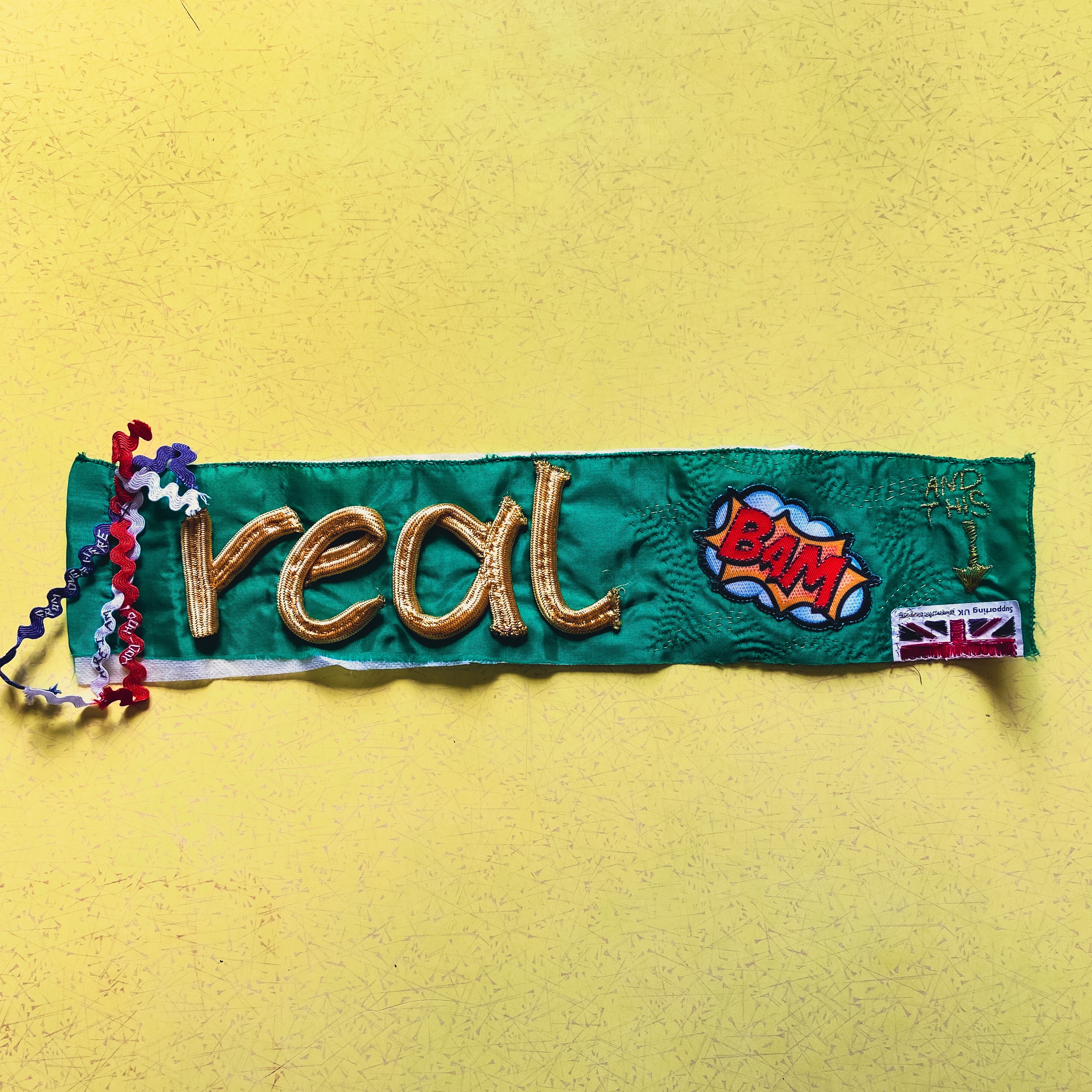

Sew What?
Mindful Stitch Project
Slow Stitch, Women’s Voices & Collective Care
Period
8 March To 10 October 2021
My Role
Artist, Project Lead & Facilitator
Project Type
Community Project
Location
Online / International, With Coventry Public Outcomes
Project Overview
Sew What? was my first Arts Council England funded participatory textile project, running from International Women's Day on 8 March to World Mental Health Day on 10 October 2021. More than 100 women and girls took part through slow stitch, shared words and collective making during lockdown.
The project grew directly from PROCESSIONS and became an important early root of the mycelium network that now runs through my practice. Taking place online with women across the UK and internationally, and with public outcomes in Coventry, it used slow stitch and shared making to build connection and mindful mental health awareness during lockdown. Each participant received cloth for three clooties: one for herself, one to return to the collective work and one to pass to a friend or neighbour, stitched or blank so that the invitation could keep travelling. By World Mental Health Day the women tied their own clooties outside and shared photographs online, creating a kind of virtual village at a time when people were physically separated.
This page brings the complete project story together. The original Sew What? 2021 project archive remains online alongside the mindful stitching tutorials and the Story Banner gallery, so the original resources and participant evidence remain part of the public record.
A Project Built Around Connection
Sew What? began in 2021 during lockdown as an Arts Council England supported participatory textile project. People were living behind their own doors, separated from friends, family and many of the ordinary encounters that usually hold a life together, and I was looking for a way for women and girls to feel connected while physically apart, to build creativity collectively and to give difficult thoughts somewhere to go. The project ran from International Women's Day on 8 March to World Mental Health Day on 10 October. More than 100 women and girls took part, many without a textile background.
Where The Mycelium Began
The roots of Sew What? reach back to PROCESSIONS in 2018. I now see PROCESSIONS as the beginning of the mycelium network that runs through my practice: women making together, words carried through cloth, relationships growing into later opportunities and one project feeding another rather than ending cleanly. It connected me to the suffrage colours and banner tradition, to Artichoke, and to Anne-Marie from the PROCESSIONS project, who later supported me in navigating access to Arts Council funding.
Sew What? became my first Arts Council funded project. I do not see that as a separate beginning. It grew from the confidence, materials, relationships and questions that PROCESSIONS had already set in motion.
Text, Cloth & Women's Voices
The project also grew from a much longer interest in women using stitch to carry words, identity and experience. Judy Chicago's Birth Project had shown me how needlework could become part of a large collaborative artwork made across distance, but I was also thinking about Agnes Richter and Lorina Bulwer, two women whose stitched words survive from lives shaped by institutional confinement. Their circumstances were not the same as one another, and I do not want to flatten them into the same story, but I was drawn to the way scraps of cloth, thread and repeated words became somewhere to put thoughts that were difficult to contain elsewhere.
When lockdown arrived, that history felt unexpectedly close. We were not living their lives, but we were all experiencing confinement of a different kind, cut off from ordinary social contact and spending long stretches inside our homes. I understood those earlier stitched texts as examples of women using the materials available to them to express themselves and perhaps ease some of their mental anguish. That relationship between thought, cloth and repeated hand movement fed directly into the idea of a 'String Of Consciousness': words made material through the slow physical act of stitching, at a moment when many of us needed somewhere to place thoughts that were becoming difficult to carry alone.
Reusing The Suffrage Sashes
The material starting point carried its own history. Artichoke had donated unused suffrage coloured sashes from PROCESSIONS, and I chose to repurpose them rather than begin with newly bought cloth. A material first made for a mass artwork about women's political history became the base for a new project about women's present day words, care and connection. That decision became an important example of the reuse and resourcefulness that I later made more explicit in my environmental practice.
That approach now sits within the wider material responsibility I describe in my Manifesto.
Designing Participation For Lockdown
The invitation was deliberately simple, but I was beginning to think carefully about how creativity could travel without needing me to be present at every stage. Each participant received cloth for three clooties. One was for herself, one would come back to me and become part of the collective work, and the third was for a friend or neighbour. It could be passed on already stitched as a small act of care, or left blank so that another woman could make her own and experience the slow process for herself. Free packs, online stitch along sessions and straightforward tutorials meant people did not need specialist equipment, previous experience or direct access to me to take part. The practical resources developed for the project are still available through my mindful stitching tutorials.
The packs themselves were built around that same idea of resourcefulness. The fabric envelope that held each pack was also the clootie base: the side seams could be cut, the cloth opened out flat and then divided into three, so the packaging became part of the making rather than waste. I estimated how much thread each person might need and hand wound it onto small cardboard bobbins. The thread had been donated by the Embroiderers’ Guild, which I was a member of at the time. King Edward VI College let me use their tables and photocopier while I made the packs, so even the practical preparation depended on relationships already around me.
The repeated clootie format gave us a shared starting point without asking everyone to make the same thing. The words, stitches, pace and level of confidence belonged to each maker. Some women stitched their words in languages other than English. Some contributions were careful and decorative, others direct and spare. What mattered was that the work could hold many different voices without requiring people to become confident stitchers first, and that the structure was simple enough for somebody else to pass the invitation onwards.
International Women's Day on 8 March 2021 became the first shared public moment. Women were already stitching words into the reused suffrage coloured cloth, and the separate pieces began to appear together through online sharing, a ribbon gallery and my own ribbon lantern response. It was the first glimpse of how something made privately at a kitchen table or on a sofa could become visible as part of something collective, while still allowing each woman's words and way of stitching to remain her own.
From Clooties To A Virtual Village
As the project developed, the participants changed its direction. I became increasingly aware that community projects can build momentum and connection and then end abruptly when the funded activity finishes. I wanted Sew What? to leave enough room for people to complete their own journey rather than simply stopping because the original plan had ended. That meant listening, adapting and allowing new phases to grow from what people were actually bringing to the work.
By World Mental Health Day on 10 October 2021, Sew What? had become much more than a way of exchanging stitched clooties. The women had been making alongside one another for months, and I wanted the final shared action to make that dispersed community visible. We could not sit around the same table, but we could still do the same small thing in many different places and recognise that other people were alongside us.
The older clootie tradition appealed to me because I understood it as something a village could do together, with people bringing different hopes, worries and beliefs to the same shared act. For World Mental Health Day each woman took her own stitched clootie outside and tied it somewhere close to home, perhaps to a tree, a gate, a washing line or whatever outdoor place she had available. The photographs began appearing online as women showed one another where their clooties had been tied. We had become our own kind of virtual village, with women taking part across the UK and internationally. In the way I wanted this village to work, race, religion, age, background and confidence with stitch were not conditions of belonging. We were geographically scattered, but seeing the same small action happening in different places made the group visible to itself. No one was making entirely alone.
What also mattered was that the creativity did not have to keep coming back through me. This was the first time I had deliberately experimented with what I now think of as arms length participation. I could create the invitation, provide the materials and give people enough support to begin, then allow the making to travel through participants' own relationships. A friend or neighbour did not need to know me or join a formal workshop. One connection could lead to another, spreading through ordinary relationships without requiring me to sit at the centre of every interaction. Looking back, this is one of the clearest early examples of the mycelium that now runs through my practice.
That movement did not only travel out through the women taking part. When students returned to KECS, I left a basket in the cafeteria with cloth and handwritten instructions, and the clootie idea took on another life there. Students tied their worries to the railings outside the college. I had used KECS tables and photocopier to make the original packs, then the project came back through the same relationship in a different form. It is one of those loops I understand more clearly now than I did at the time.
From Private Stitching To Public Work
Sew What? did not end neatly when the original funded activity finished. During the first clootie phase, one of each woman's three clooties came back to me. I sorted the returned pieces and began stitching them together into a long ribbon, which was then wrapped around the Coventry Clootie Lantern. What had begun as separate acts of making in people's homes had become a collective textile carried into public space. The project then moved into the Story Banner phase, where women stitched advice and words they would give to a younger version of themselves. Sarah Ibberson later filmed both phases, and the Sew What? films remain part of the project's public record. From there, the Story Banner work developed further through Advice To Your 15-Year-Old Self, and that later branch went on to change form again through the Coat of Kindness and the reconstructed quilt shown at the Festival of Quilts. I think of these as connected branches rather than a single project getting longer and longer.
One small part of that continuing life happened at Coventry Peace Orchard. Some women really threw themselves into Sew What?, joining from different parts of the UK and from as far away as Australia, and I wanted to thank the people who had helped this strange lockdown community grow. I stitched their names onto scraps of my own fabric and tied them to the fence at the Peace Orchard, sending my thanks and gratitude back out through the universe to women I had become connected to through stitch even though many of us had never met. Later, some local children burnt the clooties. I was surprisingly all right with that. They had already done what I needed them to do, and what happened next opened another connection. People from the Peace Orchard went to speak with the school, not simply to complain about damaged artwork, but to understand what might be going wrong for the pupils and whether the orchard community could offer some support. The work had changed again, this time through something I could never have planned.


