


How Soil, Mycelium & Patience Shaped A Community Flax Project In Derbyshire

Updated: 1 day ago
This post documents how I prepared the soil for a community flax project in Derbyshire, learning as I go rather than following a fixed method.
I am not, and never have been, a gardener. I am a contemporary community textile artist working in place, responding to local history, material culture, and the conditions directly in front of me. The flax beds sit at the front of my home in Riddings, Derbyshire. This is intentional. The work is visible, domestic, and part of everyday life. It is shaped by Derbyshire's flax and rope making heritage, including the historic ropewalk at Waingroves Community Woodland, close to Riddings, and the British Hemp and Flax Development Co. Limited, which once operated locally.
This Community Flax Project in Derbyshire brings together soil care, flax heritage, and place-based textile practice through learning in public rather than instruction.

This season marks my third flax harvest in this soil. Each year has taught me something different. The first was about noticing what was missing. The second revealed what happens when timing and care are disrupted. This year is the first time the ground has been prepared fully, slowly, and with intention.
What follows is not a guide, but a record of process. A way of working that values patience, surface level care, and attention over certainty or expertise.
Learning In Public, Not Gardening
My route into growing flax did not come through horticulture. It came through history and place. Living here led me to research the industrial flax and hemp activity that once shaped this area. Rope making, fibre production, and flax processing were embedded in everyday working life. That knowledge has largely been lost, interrupted by industrial change and distance from the materials themselves.
Rather than attempting to recreate expertise, I am paying attention to what is possible now. In domestic soil. With limited tools. Through shared learning.
Mistakes are part of this process. So are interruptions. Weather, animals, missed seasons, and unexpected outcomes have all shaped how the work has developed. Instead of correcting these moments, I have tried to respond to them.
This approach mirrors my wider practice. I work alongside people, places, and materials rather than positioning myself as an expert. The soil becomes a collaborator rather than a problem to solve.
What Was Here Before
This plot did not begin as fertile ground.
When I moved here, the soil was compacted, heavy, and exhausted. Mint and thistles dominated. The previous owner had relied on weed killer year after year. In places, the ground was so hard that I had to break it with a hammer. There were no worms. That absence mattered. Soil carries memory. For a long time, this ground had been managed through suppression rather than care. Nothing was allowed to cycle, rot, or return.
Change did not happen quickly. It came through stopping certain habits rather than introducing new ones. No chemicals. No digging. No forcing productivity.
Worms returned before anything else visibly improved. That felt significant.
Last year, because I was working away, I missed the window to prepare the bed with this level of care. The flax still grew, but the soil work was incomplete.
Looking back across three growing seasons, the change in the soil has been gradual but tangible.
Learning From Mycelium
When I moved here, I was part of Walking Forest. Through that work, I learned about the importance of mycelium in healthy ecosystems. Mycelium connects. It carries nutrients, shares resources, and supports life quietly underground. It is not visible, but it is essential. It works slowly, collectively, and without hierarchy.
That understanding stayed with me.
As I began working with this soil, and later with flax, I found myself thinking less about outcomes and more about relationships. Between plants. Between soil and people. Between past use and future possibility.
I wanted to act as mycelium in my community.
Not in the foreground, but as a connector. Someone who helps knowledge move. Someone who creates conditions for growth without owning it.
I have written elsewhere about how mycelium's connective qualities inspire creative practice, for example, in Mycelium Magic: Exploring Iris van Herpen's Sustainable Fashion, where I reflected on the material and conceptual implications of fungal systems. That earlier exploration of mycelium now shapes how I approach soil, time, and collaboration in this flax project. This idea now shapes how I grow flax, how I share seeds, and how I design making processes that can be passed from hand to hand without specialist tools.
Letting The Ground Carry On Working
Last season, I left more in the ground than planned.
After harvesting and retting the flax, some seed remained on the stalks. Pigeons fed on them and redistributed them across the bed, resulting in a second, unintended crop of flax. Alongside this, I grew buckwheat as an autumn cover crop to support soil structure and nutrient cycling.
Rather than clearing everything away, I allowed both crops to remain in place over winter.
When the time came to prepare the bed this year, the remaining flax was cut down at soil level. The stems were broken into smaller pieces and returned to the surface as litter, spread lightly across the bed to encourage natural breakdown.
A fine skim of compost was added over the top. Not to feed the plants, but to protect the surface, support decomposition, and improve seed contact.
Nothing was dug in. Roots were left intact. Disturbance was kept to the very top layer only.
The ground was allowed to carry on working while I stepped back.
Working In Public
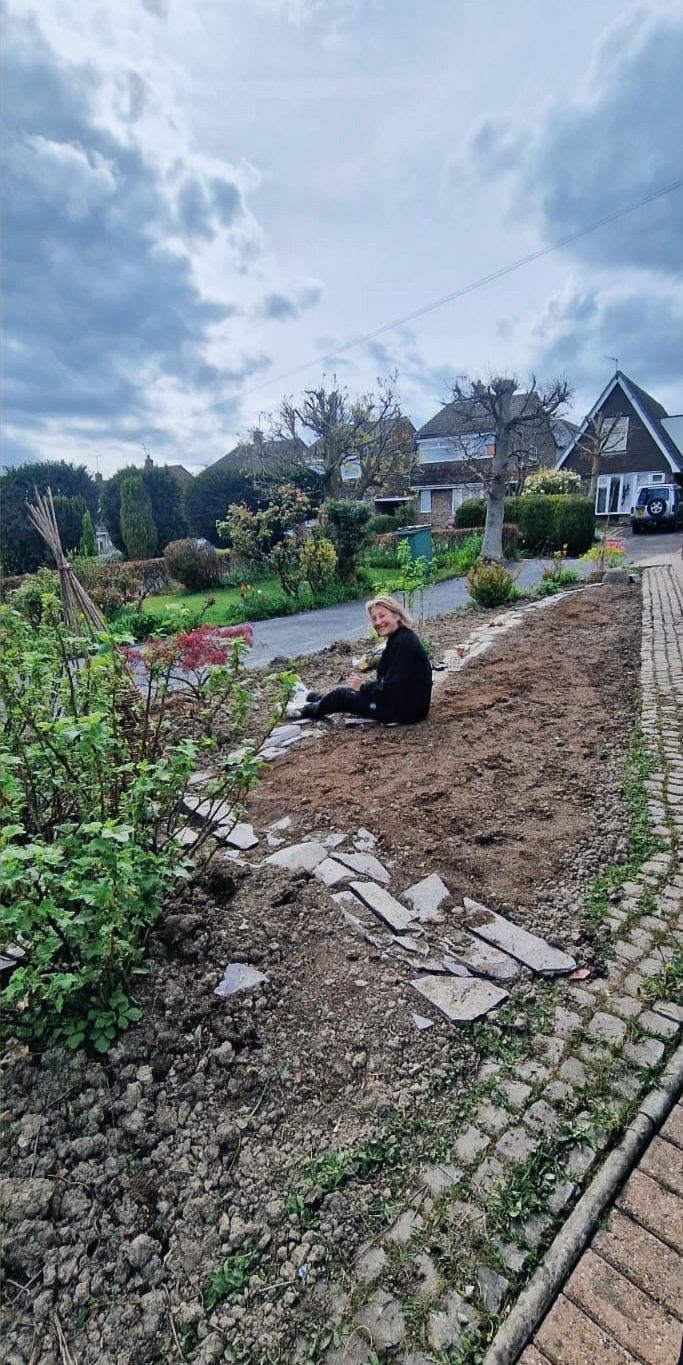
The flax beds sit directly beside the pavement. Preparing the soil is not hidden work.
Even while I was covered in mud, people walked past and said hello. Some asked what I was growing. Others simply smiled. The work created small pauses in the rhythm of the street. There is something about flax, about doing something slightly unexpected in a front garden, that encourages connection. It interrupts routine without demanding attention.
The location matters. The visibility matters. Doing something different matters.
The soil preparation is not just ecological care. It is a social invitation.
Protecting What May Be Forming Below The Surface
After three years of gentle treatment, this soil feels different.
Worms are present. The surface holds together. Moisture lingers longer. The ground no longer resists touch in the way it once did.
I cannot see what is happening below the surface, but I am increasingly aware that networks may now be forming there. Fungal relationships take time. They develop through consistency rather than intervention.
This is why I work lightly.
By cutting plants at the base rather than pulling them out, by avoiding digging, and by keeping disturbance to the surface only, I am choosing to protect what may be developing underground. The soil is no longer something to be broken or corrected. It is something to be supported.
From Soil To Community Making In A Community Making
The flax grown here will not be woven into cloth.
Instead, it will be bruised and worked into small, hand-sized baskets using techniques I have developed that require minimal equipment and no specialist skills. Scissors, thread, and a large-eyed needle are enough. Materials that can be found in most households or shared easily.
These baskets are not endpoints. They are carriers. For stories, seeds, and shared knowledge.
As part of Derbyshire Makes, this work will move from the garden to public space, inviting people to make, talk, remember, and reconnect with flax, a plant that once shaped this area's economy and identity.
By growing and working side by side, we create space for conversation, care, and collective understanding of place.
Why This Work Starts Here
This soil work is quiet and easily overlooked, but it is foundational.
It reflects a way of working that values process over polish, participation over perfection, and attention over speed. It mirrors my wider community practice and sets the ground for the activities, conversations, and shared making that will follow.
Everything begins here.
With soil.
With patience.
With choosing when to stop.


