


From Derbyshire To Venice | Flax, Fashion Fictions & The Long Thread

Updated: 6 days ago
Venice had been on my bucket list for years. When I finally booked the trip, I invited three friends to come with me, none of whom had visited the Biennale before. Somewhere along the way, I appointed myself expedition leader. There were maps, highlighted pavilions and carefully researched routes. I imagined two full days wandering between exhibitions, gradually building a picture of contemporary art from around the world.

Then I discovered the Biennale is closed on Mondays. Monday was one of the days we were there. The carefully constructed plan unravelled rather quickly. Instead of two days, we had one. Some pavilions would have to be abandoned. Others would need prioritising. Routes were redrawn. Expectations adjusted. Fortunately, we had already agreed that nobody should feel guilty about staying somewhere longer than expected or moving on if they wanted to. Venice had other ideas about my itinerary from the very beginning.
There was another coincidence. The day before leaving, I successfully spun flax for the first time.

To anyone outside the textile world, that probably sounds like a very small achievement. To me, it felt enormous. For weeks, I had been learning to spin as part of my Irregular Thread project. There had been wool, rolags, broken joins, frustration, repetition, and many moments when my hands, feet, and fibres seemed to be operating entirely independently of one another. When the flax finally held together as yarn, I boarded the plane carrying a different understanding of thread than the one I had started with a few weeks earlier.
Alongside the spinning, I was preparing for a forthcoming talk at Derby Museums about flax. The museum's current exhibition had led me towards Amy Twigger Holroyd's Fashion Fictions project, and I had been encouraged to use World 259 as one possible starting point for the talk. Realising I knew very little about Amy's wider work, I packed the book in my hand luggage and began reading on the flight out. Before long, I was highlighting pages. References to Rob Hopkins appeared repeatedly throughout the opening chapters. Only a couple of months earlier, I had spent a day at the old Heanor Grammar School listening to him speak as part of a Make/Shift event. During one exercise, we were invited to imagine different futures. Mine involved flax. Lots of flax. Home gardens. Kindness. Shared resources.

Many of the ingredients that later appeared in The Long Thread were already scribbled across a large sheet of paper in Heanor. There I was, somewhere between Derbyshire and Venice, reading a book suggested as preparation for a talk about flax in Derby and finding Heanor appearing all over again.
Fashion Fictions invites readers to imagine different futures. On the flight home, I began experimenting with the methodology for myself. Somewhere between Venice and Derbyshire, The Long Thread began to appear. The Pentrich Revolution kept entering my thoughts, though not quite as I had learned it. Instead, I began imagining another procession. Women workers, farmers, miners and Italian prisoners of war walking together towards London carrying flax rather than weapons. Linen banners replacing flags. Communities marching to protect not simply jobs but a way of living. The further the march travelled, the larger it became. The Arkwright Activists appeared somewhere along the route and refused to leave.

The big day in Venice itself rarely followed the route I had imagined. We wandered. We got lost. We spent time searching for pavilions that appeared determined not to be found. At one point, we abandoned the search for Somalia and instead found ourselves strolling back along the waterfront towards St Mark's Square. I remember feeling unexpectedly joyful. Venice had occupied a corner of my imagination for years, and suddenly I was actually there. More than once, I caught myself smiling for no particular reason.
The Austrian Pavilion surprised all four of us. We spent a long time talking about it afterwards. What moved me was not simply the installation itself, but the artist's willingness to place her own naked body at the centre of the work. There was nowhere to hide. The work relied on trust, vulnerability, and the courage to be seen. Visitors were invited to participate. The toilet formed part of the installation. Urine was processed through technology developed for NASA and returned to the system as clean water. Inside a tank, a woman sat submerged. I used the toilet and later spoke with one of the assistants. She had spent four hours in the water that day. We talked about how it felt. She described the experience as quiet, still and meditative. As someone who has spent much of the past year wrestling with visibility in my own practice, I recognised something of that challenge immediately. Standing in front of a museum audience, talking about flax, suddenly felt a little closer than I might have liked.
The Japanese Pavilion offered a different sort of encounter. Visitors queued to hold one of several soft fabric babies. You couldn't choose your own. An assistant selected one for you. Ours happened to be a baby whose fabric body carried repeated hand-stitched repairs across the gusset. While reading the poem hidden beneath its nappy, my attention kept drifting back to the stitching. Repairs crossed earlier repairs. Wear had been addressed and then addressed again. The baby we were handed happened to be the repaired one.

By the time we found the Welsh Pavilion, almost by accident, it was late in the day and many of the decisions about what we could and couldn't see had already been made for us. I spent longer there than almost anywhere else.
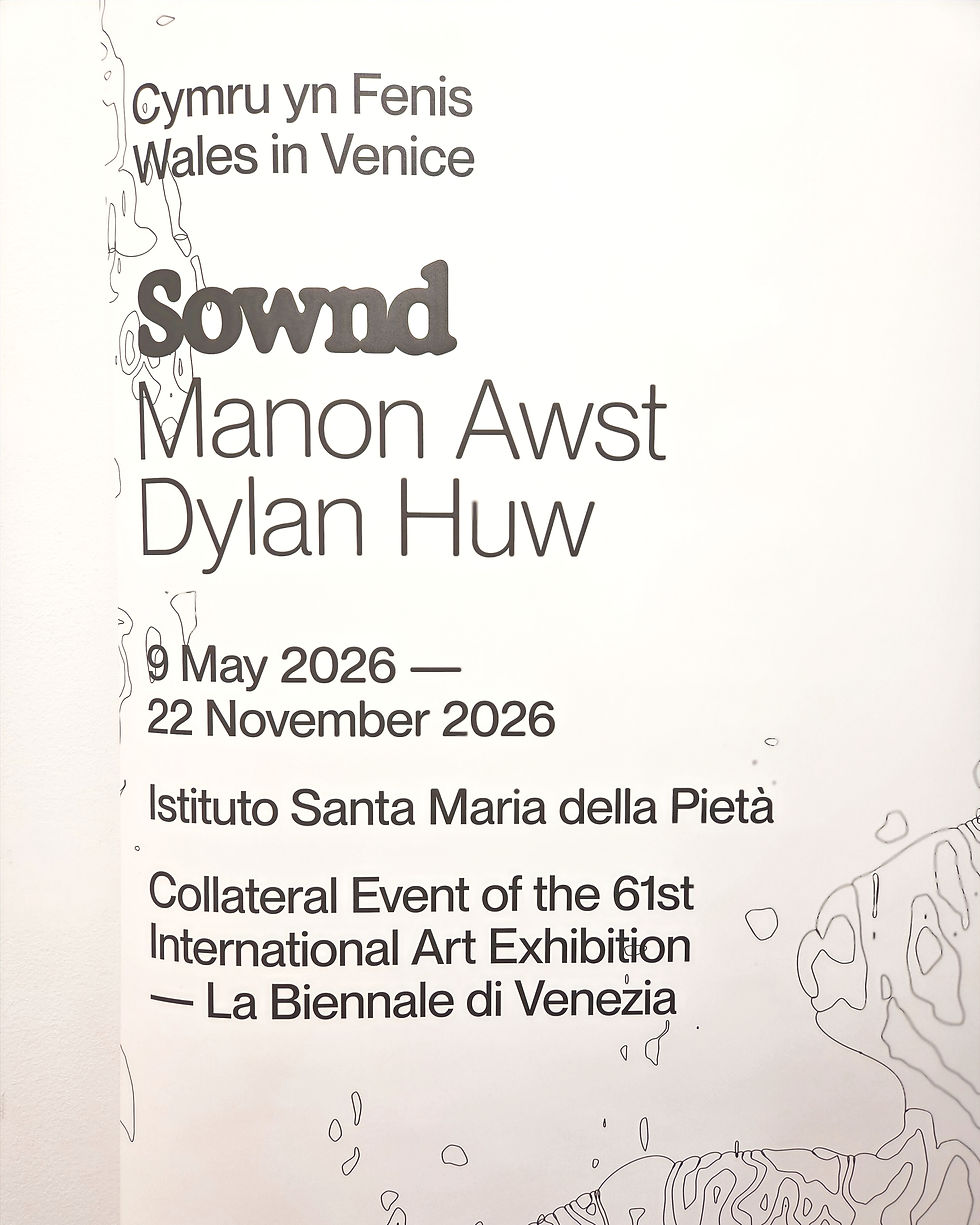
The Welsh Pavilion felt different. Over recent months I had spent a great deal of time in Wales through Irregular Thread, even taking my spinning wheel with me on several occasions. Sitting there in Venice, surrounded by familiar accents and language that drifted gently through the building, I felt unexpectedly at home. The artists were working in North Wales rather than the valleys I had come to know, yet something felt familiar. Mining communities, labour, landscape and making were all present in different forms.

Visitors were invited to sit on the installation. I sat on the sacks, photographed details and kept returning to the vessels. Having spent the previous weeks learning to spin flax, I became slightly obsessed with the fibres used to create them. The more closely I looked, the more convinced I became that I had spotted flax. The fibres had been knotted together in a way that felt strangely familiar. Sitting there, I found myself examining the fibres between my knees for signs that I was right. When I asked one of the exhibition assistants, they suggested it was probably jute. I can't pretend I wasn't slightly disappointed. After weeks of growing flax, spinning flax and talking about flax, I seemed determined to find it everywhere.

The encounter did not end when I left Venice. Before leaving, I asked to be connected with the producer behind the project and have written since returning home. Some threads seem worth following.
As The Long Thread continued to grow in my imagination, Italian prisoners of war kept joining the march. During the war, many worked in British agriculture, including flax production and processing. Some remained after the fighting ended and built lives here. I found myself wondering how many threads in Derbyshire's flax story were carried not only by local workers but also by people who arrived from elsewhere. The more I thought about it, the more The Long Thread seemed to fill with stories of cooperation that are easy to forget.
Historically, flax returned to Derbyshire through necessity. Laws introduced during the reign of Henry VIII encouraged its cultivation. Wartime shortages brought renewed production. The factory at Ripley formed part of that story. Both moments were shaped by national need. What if flax returned through kindness instead? What if its future rested not on conflict, shortage or production targets, but on neighbours, conversations, shared learning and cultural memory? A packet of seed passed across a garden gate will not change the world. Neither will a spinning lesson, a community growing project or a basket made from bruised flax stems. Yet these small acts create opportunities for people to meet, learn, remember and imagine together.
Learning to spin has taught me that some things only become visible after spending a long time with them. Hours are spent drafting, joining, treadling and trying again. Progress is often difficult to spot from one day to the next. The same feels true elsewhere. Amy Twigger Holroyd, Rob Hopkins, Ursula Le Guin, Stephen Willats, Creative Listening, spinning, flax, Derbyshire, Wales, seed boxes, vessels and The Long Thread did not arrive together. Most entered my life separately over several years. The connections appeared gradually through reading, making, listening, growing, travelling and paying attention. Looking seemed to be the thing that brought them into contact.

The knots in the Welsh vessels were made from individual fibres twisted together by hand. Some were small. Others were irregular and chunky. They slowed the eye down. You had to spend time with them. Venice feels a little like one of those knots. None of those threads began there. Most had been travelling alongside one another for months, perhaps years. Venice simply provided the point where I could finally see them crossing.


