


Contemporary Community Textile Artist Derbyshire UK
Collaboration Kindness Carbon Sensitivity
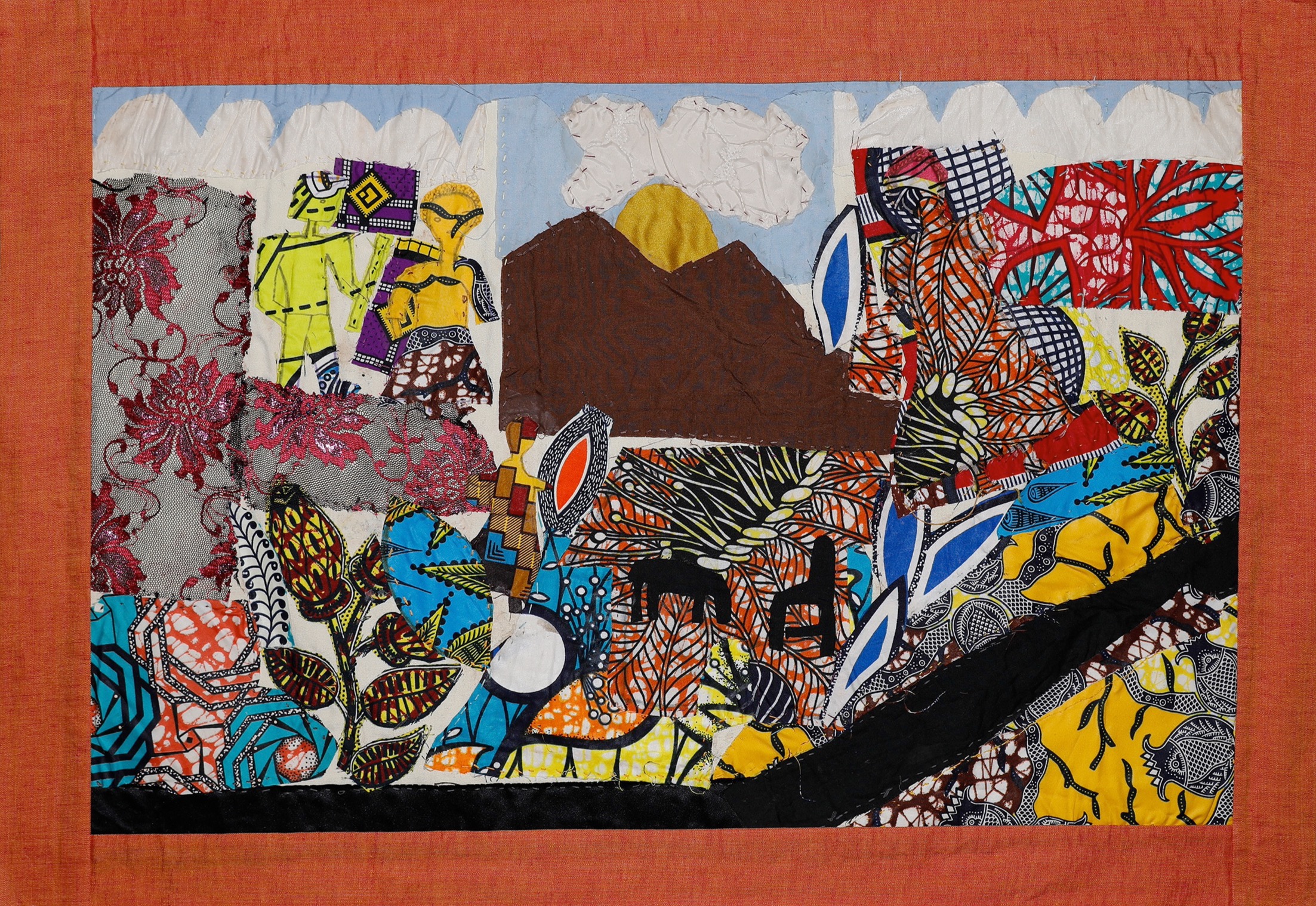


Common Threads Project
Story Cloth & Westminster Exhibition
Story Cloth, Textile Practice & Westminster Exhibition Curation
Period
2020 To 2022
My Role
Participating Artist, Supporter & Exhibition Curator
Project Type
Collaborative Project
Location
Westminster, London
Project Overview
My relationship with Common Threads Project began during lockdown, first through following and supporting their work with survivors of sexual and gender based violence, then through an online experiential story cloth circle and my own stitched responses. What began as learning gradually became a practical relationship, and in 2022 I was asked to help curate and install a Common Threads story cloth exhibition in Westminster, London.
The project sits at an important point in my practice, where slow stitch, listening, trauma aware creative work, curating and participation began to overlap. It also sharpened my understanding of collaborative authorship: I could help make space for the work and its stories without claiming the methodology or the experiences held within the cloths.
Supporting Common Threads From Lockdown
During lockdown I had already been following Common Threads Project for some time. I was fascinated by the way they were working with women living through extremely difficult circumstances, using stitch and story cloth within a carefully held therapeutic process. Around Thanksgiving in 2020 they asked me to contribute to their #GivingTuesday initiative, so I stitched the words ‘Space To Breathe’ into a length of sheer purple fabric left from the sashes used in the PROCESSIONS project. The fabric was thin, unstable and surprisingly difficult to work with. At a time when finding any real space to breathe felt difficult too, that awkwardness seemed fitting. I filmed the stitched ribbon as my response in support of Common Threads and the women they worked alongside. I wrote about that early relationship in #GivingTuesday.
The relationship mattered because I was not simply looking at textile work. I was seeing stitch used as a way of making room for experiences that could be difficult to put into words. It made me wonder what needs might also exist in the UK, and what I could learn from an approach that treated textile making, listening and care as connected rather than separate things.
Learning Through Story Cloth
I later joined an experiential online story cloth circle hosted by Rachel A. Cohen, Tally Tripp and Lisa Raye Garlock. The circle introduced me more deeply to story cloths as objects that can carry memory, pain, identity and hope, including the small pockets sometimes sewn into the reverse to hold messages a maker chooses to share. That learning fed directly into my own slow stitch practice, which I reflected on in The Autopsy & Soul Of A Slow Stitched Textile Art Piece.
By then I had become particularly interested in clooties and was experimenting with them as part of my Arts Council funded Sew What? project. After making the Common Threads ribbon, I made a separate clootie ribbon using dishcloths, rags and other ordinary domestic materials. I wanted to include it here because my projects rarely develop in isolation. Materials, ideas and ways of working often move between them, with one piece of research feeding another.
Meeting The Story Cloths In Person
Until Westminster I had only encountered the Common Threads story cloths virtually. Seeing them physically for the first time was completely different. I was bowled over by their beauty and artistry: the colour, layering, tiny stitched details, shifts in scale and the individuality of each maker became much more visible in the room. The story of Promesse had already helped me understand the meaning these cloths could carry, but standing beside the actual works made their material presence much harder to separate from the stories they held. I had previously shared The Healing Story Of Promesse after being asked to help carry that story onwards.
My fascination with stitched words also connects to my research into Lorina Bulwer. Her densely embroidered texts made me think about what can happen when words are worked slowly into cloth rather than simply spoken. I would not describe Bulwer’s stitching as therapeutic in a modern clinical sense because we cannot know her intention, but her work raises questions that also draw me to Common Threads: how women use textile, repetition and stitched language to hold experiences that may be difficult to express in other ways.
Some story cloths were laid flat on tables so visitors could spend time looking closely at the stitch, imagery and words. Two that I was particularly drawn to were ‘This Is What Helped Me Survive’, made in the Democratic Republic of Congo, and ‘Finding My Peace’, made by a Colombian refugee in Ecuador. Seeing them at close range made clear how powerfully an image and a piece of cloth could carry the truth of a woman’s experience.
Curating & Installing In Westminster
When Common Threads were invited to put on an exhibition in the UK, they asked if I could help. I worked alongside one of their team who had travelled from New York with the story cloths, supporting the practical curation and installation in Westminster. We laid the works out on the floor and considered carefully how they might sit together. They had been made by women from different parts of the world, so each one needed proper consideration, not only as a textile work but as a story being entrusted to the exhibition. We wanted the final layout to give the pieces space, clarity and impact without losing the individuality of the women behind them.
We hung the story cloths from a washing line partly in response to the constraints of the room and the limited installation time, but the choice was also deliberate. The domestic washing line echoed the idea of ‘women’s work’. One of the strengths of Common Threads is that a sewing circle can appear from outside to be an ordinary domestic pastime, while much deeper work around trauma, memory, trust and recovery can be taking place within it. The practical limitation became part of the meaning of the installation rather than something to disguise.
The exhibition was built so people could enter the work in different ways. A film gave another route into the stories, selected cloths could be examined closely on the tables, and interpretation panels kept the women’s stories, authorship and context visible alongside the beauty of the stitching. The installation also included a participatory area where visitors could cut pieces of cloth and add them to a collective story cloth. That mattered to me because the exhibition did not only ask people to look at finished objects. It created a small opening for making, handling materials and contributing something of their own.
The 2022 PSVI Conference
The Westminster display formed part of the wider Preventing Sexual Violence In Conflict conference in London on 28 and 29 November 2022. The event brought survivors, civil society, governments and international organisations together, while the Common Threads display placed textile testimony, interpretation and participation within that wider setting. The Common Threads exhibition sat alongside creative work by other groups from around the world, which helped me understand the scale of the gathering and the many ways survivors and organisations were communicating experience, identity and recovery. I took a photograph of the conference exhibition poster because I felt proud to have played a part in bringing the Common Threads cloths into such an international setting. The Common Threads digital story cloth catalogue gives wider context to the survivor centred practice, and the UK Government conference programme provides a public record of the event.
Boundaries, Care & Authorship
This project sharpened the difference between supporting a process and claiming it. The story cloth methodology, survivor centred framework and therapeutic expertise belong to Common Threads Project. My contribution was to learn, make, support and later help curate within those values. Being useful did not require becoming the author of somebody else’s story, and that distinction has continued to shape how I think about collaboration, participation and care in my own practice.


