


Contemporary Community Textile Artist Derbyshire UK
Collaboration Kindness Carbon Sensitivity
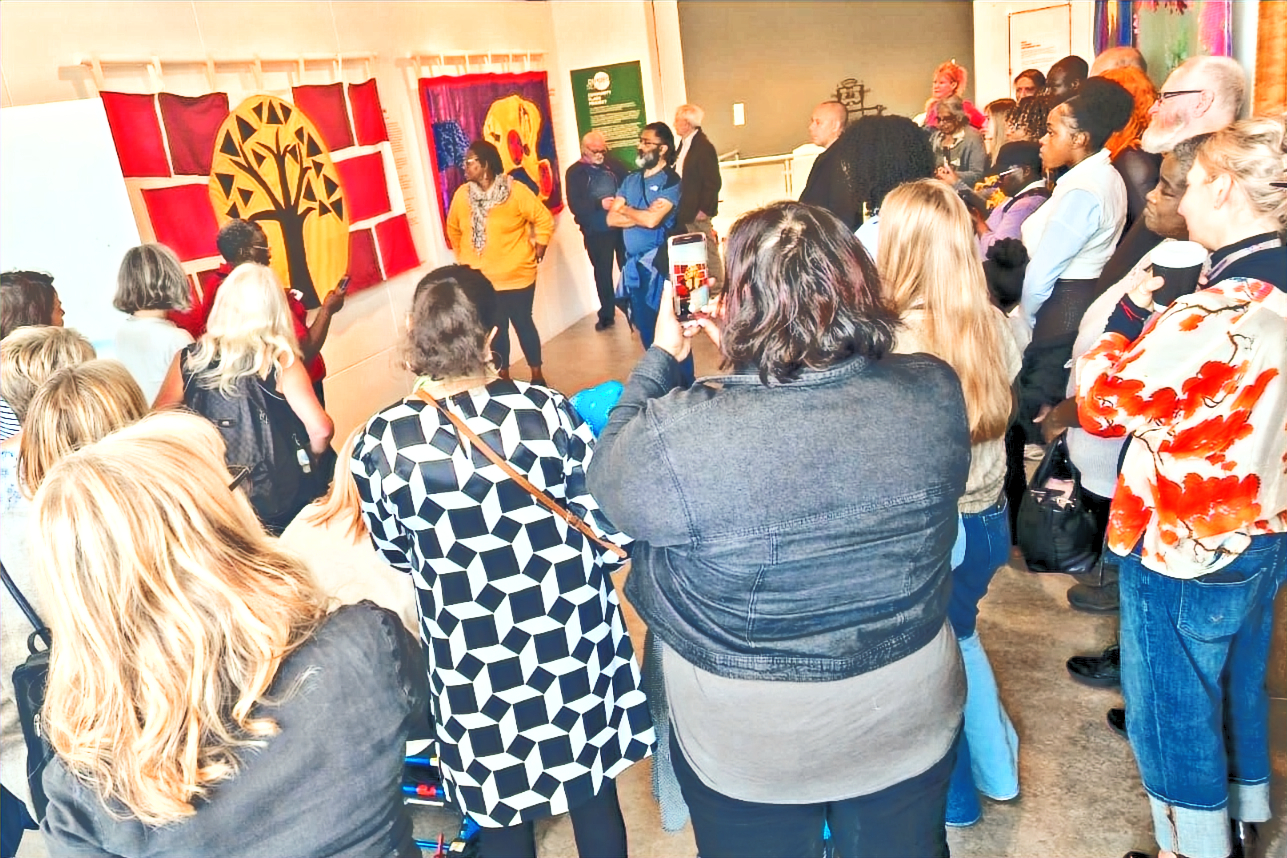

Divided Selves | Community Flag Project
Four Community Collectives Responding To Art, Identity & Belonging
Period
2023
My Role
Project Development, Artist Liaison, Facilitation, Learning Resources, Co-curation, Interpretation, Installation & Launch
Project Type
Community Project
Location
Coventry
Project Overview
I was asked by the curator I had previously worked with during Turner Prize 2021 to devise a community engagement programme for the 2023 Divided Selves exhibition at the Herbert Art Gallery and Museum in Coventry. I could choose any work in the show as my starting point. After researching the artists, I settled on Larry Achiampong's Pan African Flag for the Relic Travellers' Alliance (Ascension) and developed Community Flags, a community textile flag project, around it. I contacted Larry directly to explain the idea and how I planned to work with his artistic language.
Four community groups who had never met worked as separate artist collectives within the same framework. I worked directly with Foleshill Creates and In Stitches, while a colleague worked with Coventry Men's Shed and Inini. The groups only saw one another's flags at the formal launch. That separation was deliberate: I wanted to explore whether people beginning from different places and experiences might still reveal more in common than divides us when they are given space to communicate, make and be heard.
Devising The Community Programme
I was asked by the curator I had previously worked with during Turner Prize 2021 to devise a community engagement programme for Divided Selves. I was not handed a workshop to deliver. I could choose any work in the exhibition as the starting point, so I spent time looking across the show before settling on Larry Achiampong's Pan African Flag for the Relic Travellers' Alliance (Ascension). I developed the Community Flags idea from there and contacted Larry directly to explain what I was planning.
The brief also had audience priorities behind it: reaching more men, working in the Foleshill postcode area and connecting with communities on the edges of Coventry who did not necessarily feel part of the City of Culture programme. I wanted to meet those requirements through relationships rather than targets alone. By then I was working with what I think of as an ‘inch wide, mile deep’ approach, so I chose groups I had either worked with before or had been introduced to through trusted relationships.
Research, Context & Care
Before the community making began, I attended the launch of Larry Achiampong: Wayfinder at MK Gallery and later returned with one of the groups so they could see his work in person. I wanted people to experience the scale, material presence and visual language of the work for themselves rather than only through photographs or my explanation.
I also spent time studying the construction of Pan African Flag For The Relic Travellers’ Alliance (Ascension). The British Council Collection records the work as polyester fabric with appliqué and 2 x 3 metres. Those details mattered because I wanted the community project to respond to the way Larry had actually worked, not just borrow the idea of a flag.
The exhibition was dealing with identity, nationhood, borders, belonging and difficult histories. I knew those themes could touch painful personal and family experiences, so I attended community talks exploring Partition, the creation of India and Pakistan, and the later formation of Bangladesh. I did not want to assume I already understood what flags and national symbols might mean to different participants.
Building A Shared Visual Language
A flag is not simply a banner in another shape, and I did not expect participants to know its structure or visual language. I developed a project handbook that took the groups through Larry's work, the components of a flag, how flags use colour and symbols, and some of the principles behind flag design. The handbook created a shared starting point without telling anyone what their own flag should say.
Wherever I could, I worked within the same rules Larry had used. The community flags were made as large as the gallery corridor would allow so they could echo the scale and presence of his flags. We used appliqué because that was part of his making method. I kept the same four colour limit recorded for the Herbert project, while each group chose its own hues. For the appliquéd elements we used reused fabrics, found pieces and materials drawn from people's existing stashes.
Those common rules gave the finished pieces a visual relationship, but the imagery, stories and material choices belonged to the groups. I wanted an authentic encounter with the artistic process while leaving enough freedom for four very different responses.
Choosing Four Groups On Purpose
The four groups were Coventry Men's Shed, Foleshill Creates, Inini and In Stitches from Escape Arts in Nuneaton. I worked directly with Foleshill Creates and In Stitches, while a colleague worked with the other two groups. We used the same project framework across both facilitators so everyone began from the same artistic starting point. The Herbert's Community Flags record documents the four collectives and the finished public display. This relationship with Nuneaton had already begun through my earlier Artist In Residence work at King Edward VI College, and the same network of people and places kept resurfacing through later Herbert projects.
The groups had never met one another and did not see each other's designs while they were making. That was deliberate. I wanted to explore whether people beginning from different places and experiences might still reveal more in common than divides us when they are given space to communicate, make and be heard. They only saw the four flags together at the formal launch.
Interpretation, Co-Curation & Installation
The making was only one part of the work. I supported the groups with the wording for their interpretation panels so the text reflected what they wanted to say about their own flags. It mattered that the work was not translated into institutional gallery language that no longer sounded like the people who had made it.
I also helped co-curate and hang the finished project in the gallery corridor. Because scale had been considered from the beginning, the installation was not an afterthought. The flags were designed to occupy the available space with enough presence to feel like artworks in the exhibition, not small workshop outcomes added around its edges.
I was involved in the formal launch, when the groups met and saw one another's work together for the first time. The Community Flags display ran from 2 June to 24 September 2023 as part of Divided Selves. CV Life reported that Divided Selves had already become one of the Herbert's most visited temporary exhibitions in its history, giving the community work a substantial public context without turning visitor numbers into a claim about participation in the flag project.
Co-Production & A Longer Thread
The University of Birmingham's account of co-production at the Herbert later described the Community Flags project as a smaller, longer term continuation of ideas developed through the Coventry Banner, with sessions in community meeting spaces and invitations into the museum. That closely reflects what mattered to me about the project: building relationships, creating enough structure for people to take part confidently, and then leaving room for their ideas to change the outcome.
The project also continued questions I had been exploring through The Coventry Banner: who feels entitled to enter a gallery, whose visual language is valued there, and what changes when communities are invited to respond as makers rather than simply as audiences.
Divided Selves also brought me into contact with wider artistic practices around identity and belonging. I met Rene Matić during this period and encountered Lubaina Himid's work in the exhibition. I later came across Himid's work again at the 2026 Venice Biennale. Those encounters sat alongside the practical community work and helped keep the questions behind the project active in my own practice.


